I met Pep Vidal, an artist and physicist, when I made the Organic Origami project for the Biennal Ciutat i Ciència. So when Pep started curating an exhibition for the Fundació Antoni Tàpies, for the centenary of Tàpies’s birth, we started talking again about what I could put in.
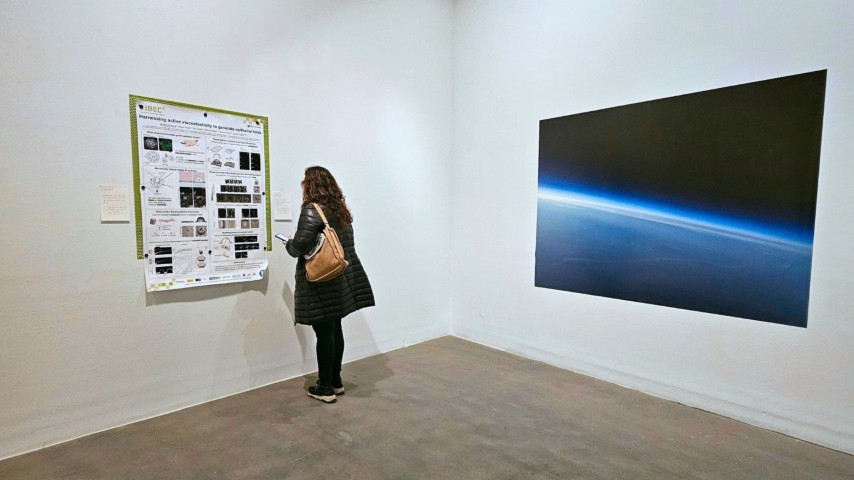
The poster in the exhibition.
Pep built the exhibition, A=A, B=B, around a book that Tàpies kept on his bedside table for a long time: La nueva visión del mundo (1954), a collection of talks on science and philosophy given in Sankt Gallen, Switzerland, in the 1950s. He wanted to bring those talks into the present, more than seventy years later, and ask what the spirit of the scientific method is, why we do science, and what it means in relation to ourselves and to art. He laid out the whole exhibition like a scientific article, so walking through the rooms felt like reading a paper. A=A stands for the world as it is, and B=B for the laws that describe it.
Pep really liked my work on tissue folding. When I deflate an epithelial shell fast, it buckles into folds, and the patterns look fun. So my first idea was to recreate that for the museum and build something. But we had that discussion in the hallway of the institute, right next to my poster of this work. And we started to think that moving a piece of the institute itself into the museum would make a much stronger link between science and art: not a new object made for art, but the poster, exactly as it was. With Xavi and IBEC on board, we quite literally took a piece of the wall and put it in the museum. I had to let go of building something, but the more we talked about it, the more I liked it.
For me, the poster was also sentimental. It represents my whole PhD. At scientific conferences, we share our ideas through posters, and I think this old, worn-out poster said more than any beautiful cell image could.
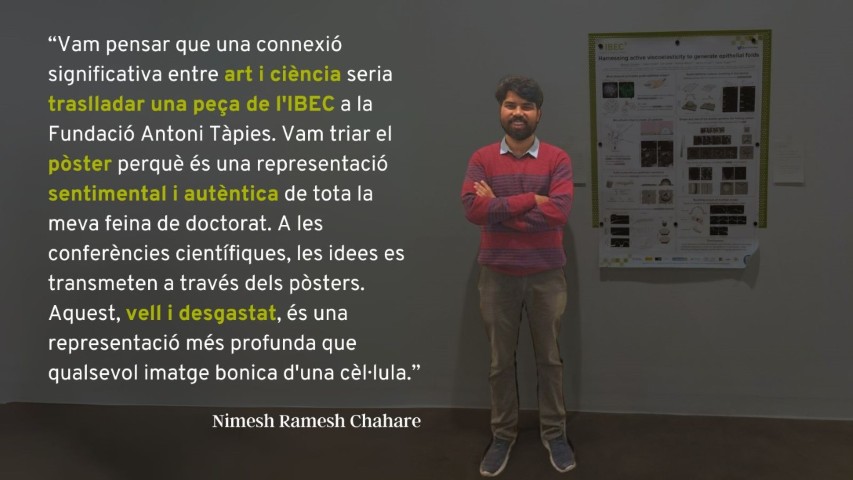
Me with the poster, Harnessing active viscoelasticity to generate epithelial folds, and the quote IBEC shared in Catalan.
So we took the poster to the Tàpies Foundation, where it hung alongside works by John Baldessari, Daniel Bejar, Lúa Coderch, Mariona Moncunill, Irene Solà and Tàpies himself. Pep put a handwritten curatorial note next to it. Roughly translated from Catalan, he wrote that folds appear when cellular tissues inflate and deflate, and that scientists analyze these geometric shapes. He liked to think that Tàpies would have been drawn to this poster too, since Tàpies was also interested in folds in different materials.
I like that connection too. Tàpies is known for matter painting: mixing different materials with paint for texture, playing with matter to bring out ideas and form. It reminds me of my work in tissue engineering, which is a way of painting with living matter. It is just a different perspective.
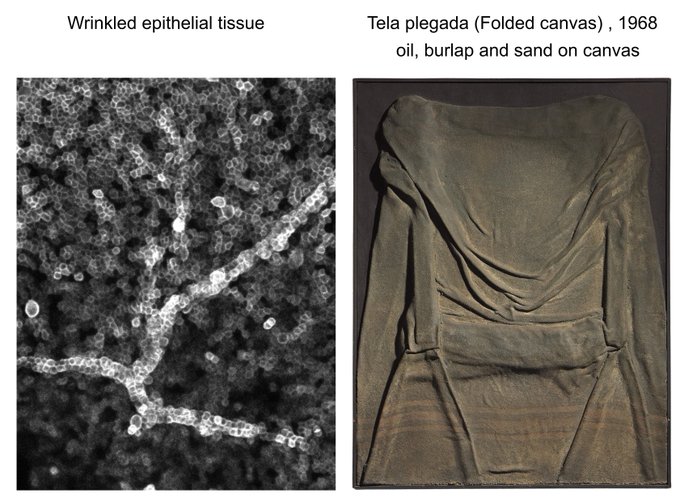
Wrinkled epithelial tissue, and Tàpies's Tela plegada (Folded canvas), 1968, oil, burlap and sand on canvas.
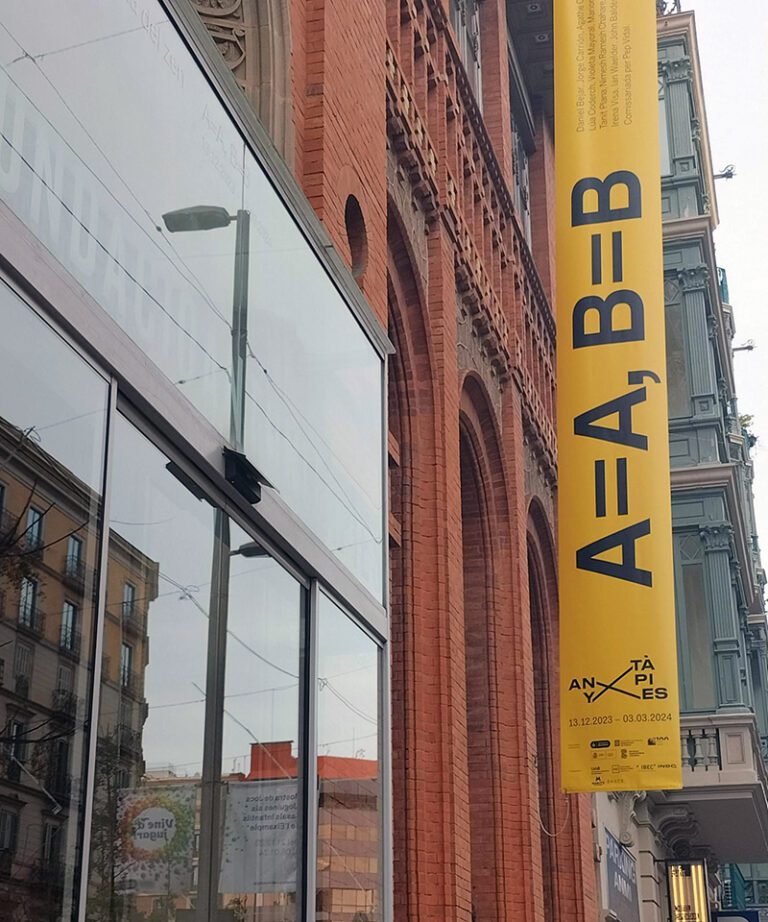
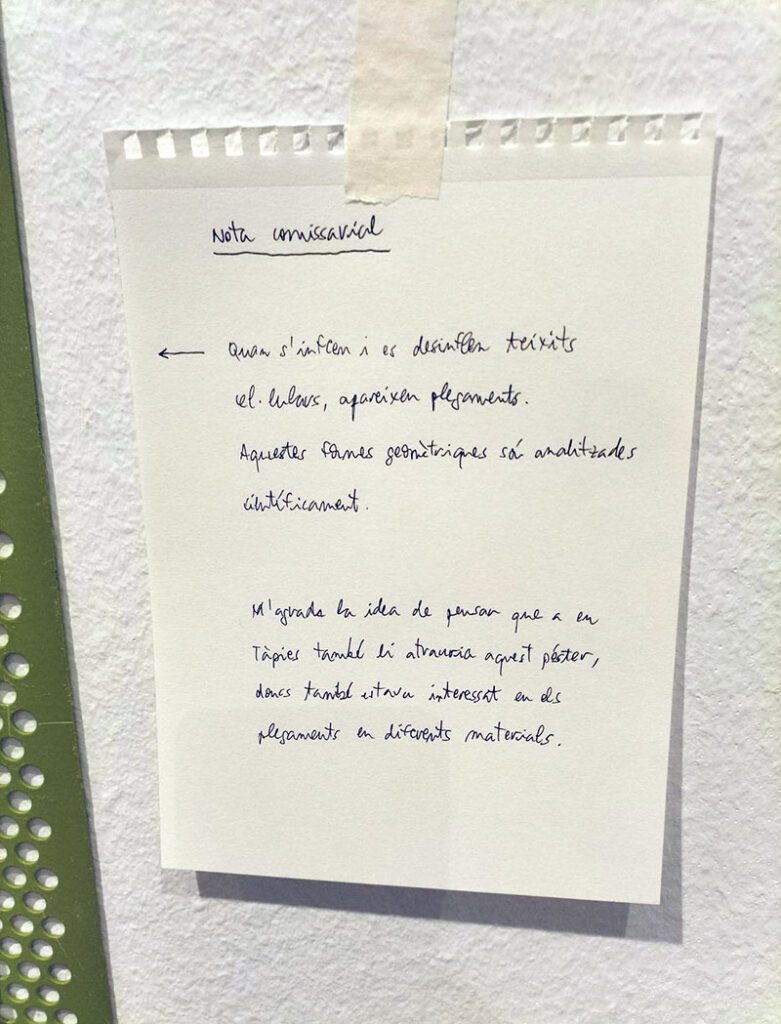
The exhibition banner outside the Tàpies Foundation, and Pep's curatorial note next to the poster.
We also connected the museum back to the institute. At IBEC, we did not leave the wall empty: where the poster used to hang, we put up a plaque saying “Piece temporarily loaned for the exhibition A=A, B=B.” So anyone walking down our hallway could see that the poster had gone to the museum.
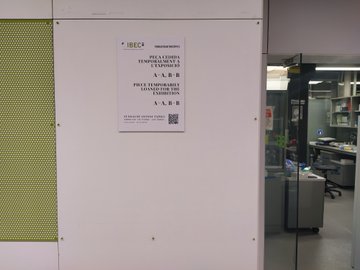
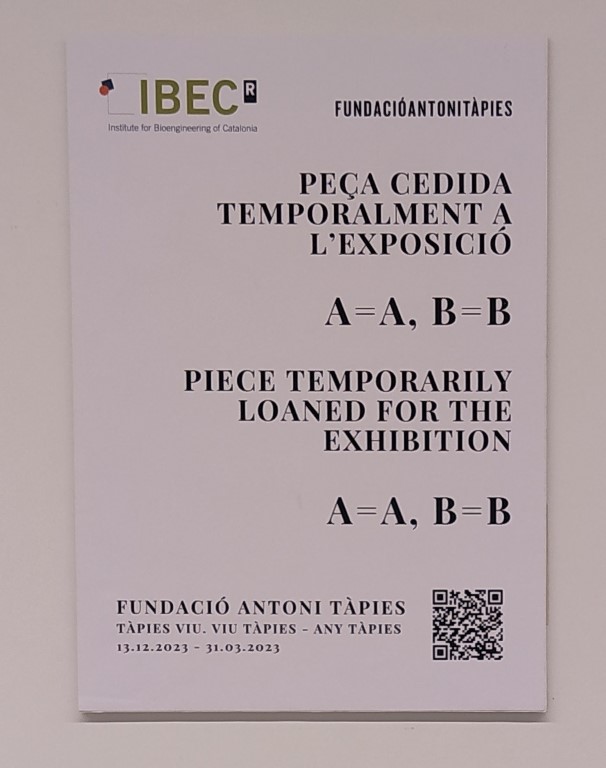
The wall at IBEC where the poster used to hang, and the plaque that took its place.
I also loved the meta layer of the whole thing. At the entrance of the exhibition, in a space called B=B, four physics students from the Universitat Autònoma de Barcelona, Zaira Amilburu, Emma Betrán, Adrià Calm and Francesc Puchal, picked one of the works every week and analyzed it scientifically: physically, chemically, even psychologically. So they made artwork on top of artwork, science about art about science. My poster was one of the works they picked, and I got three new pieces out of it.
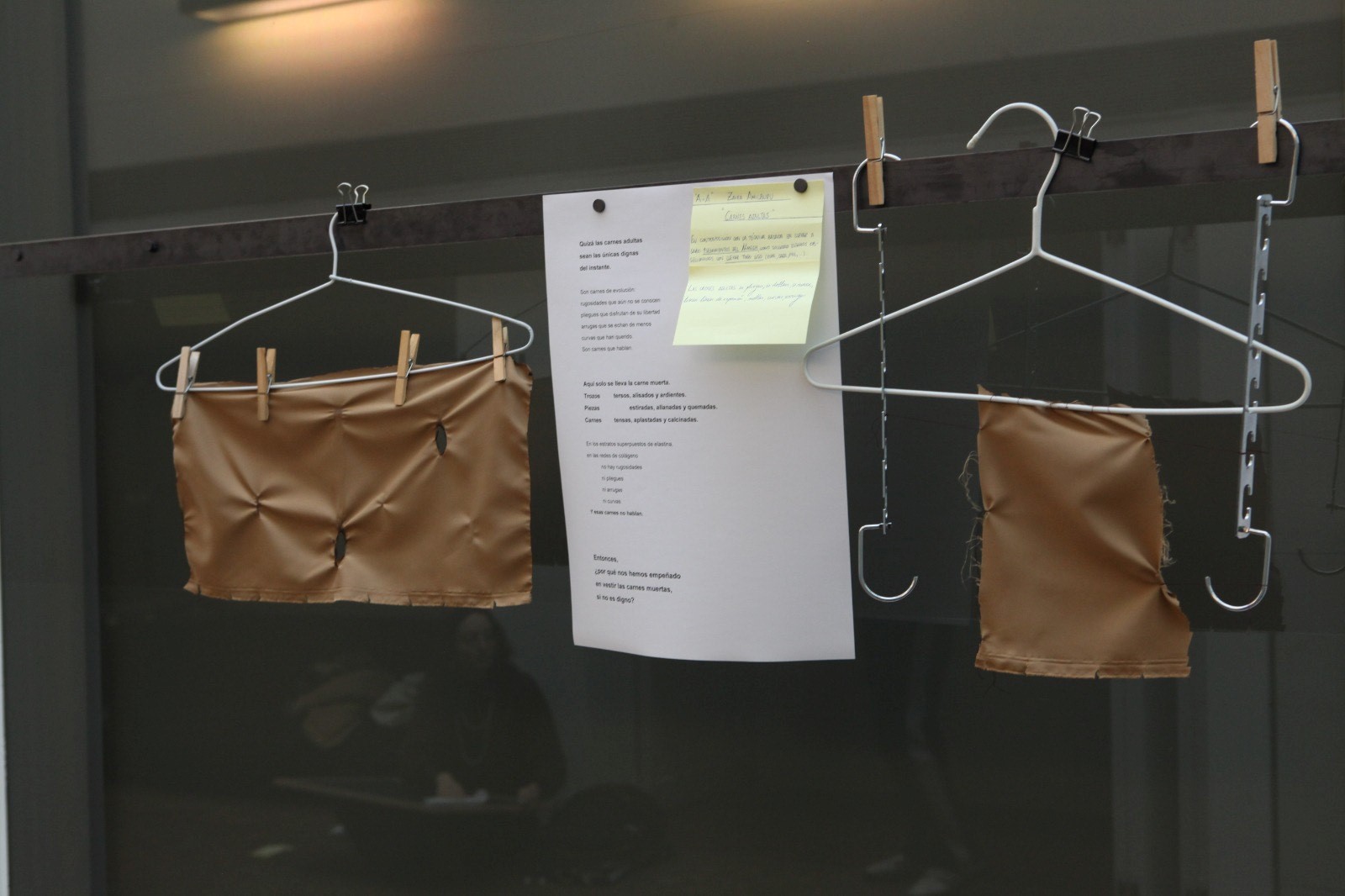
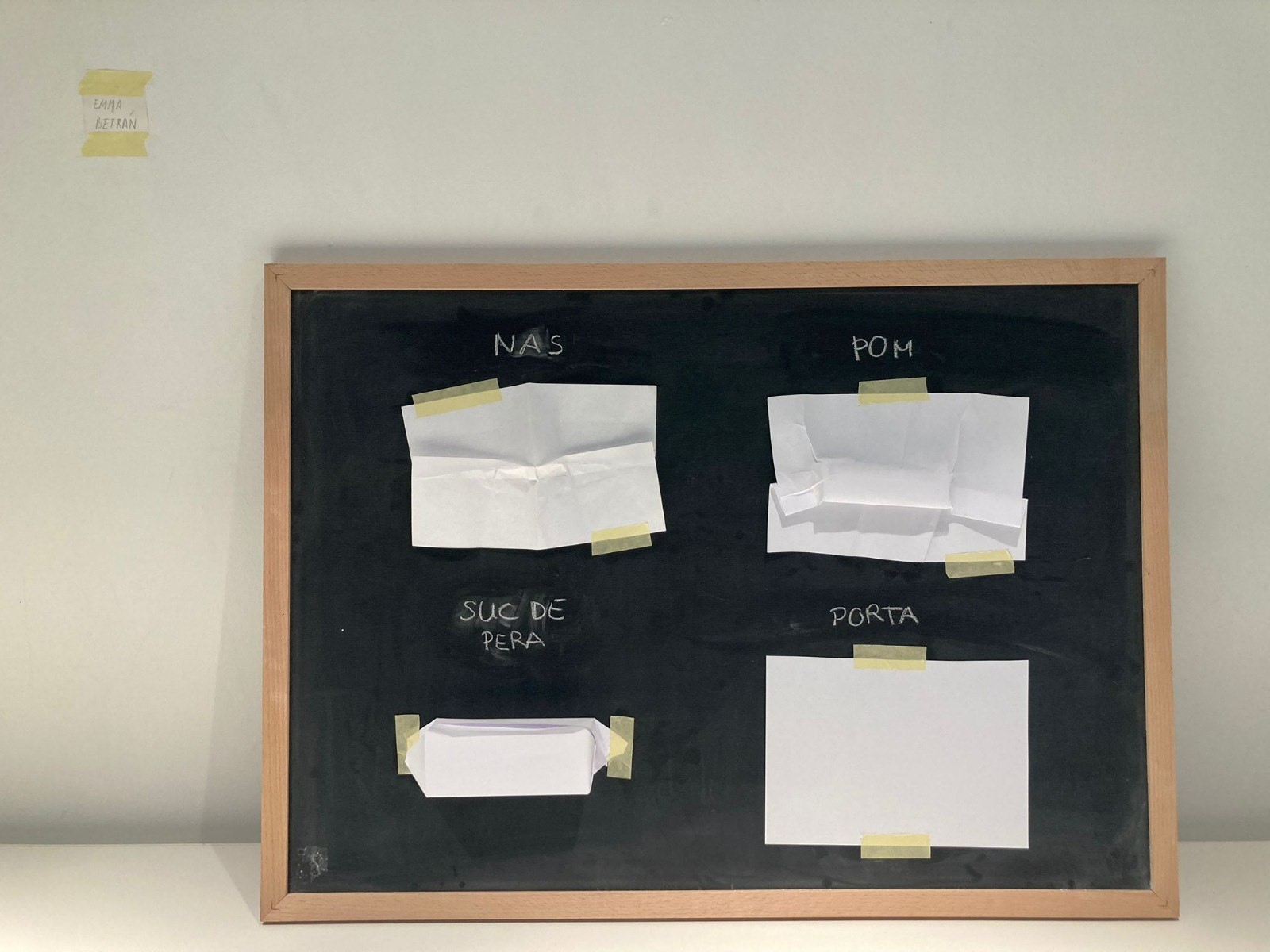
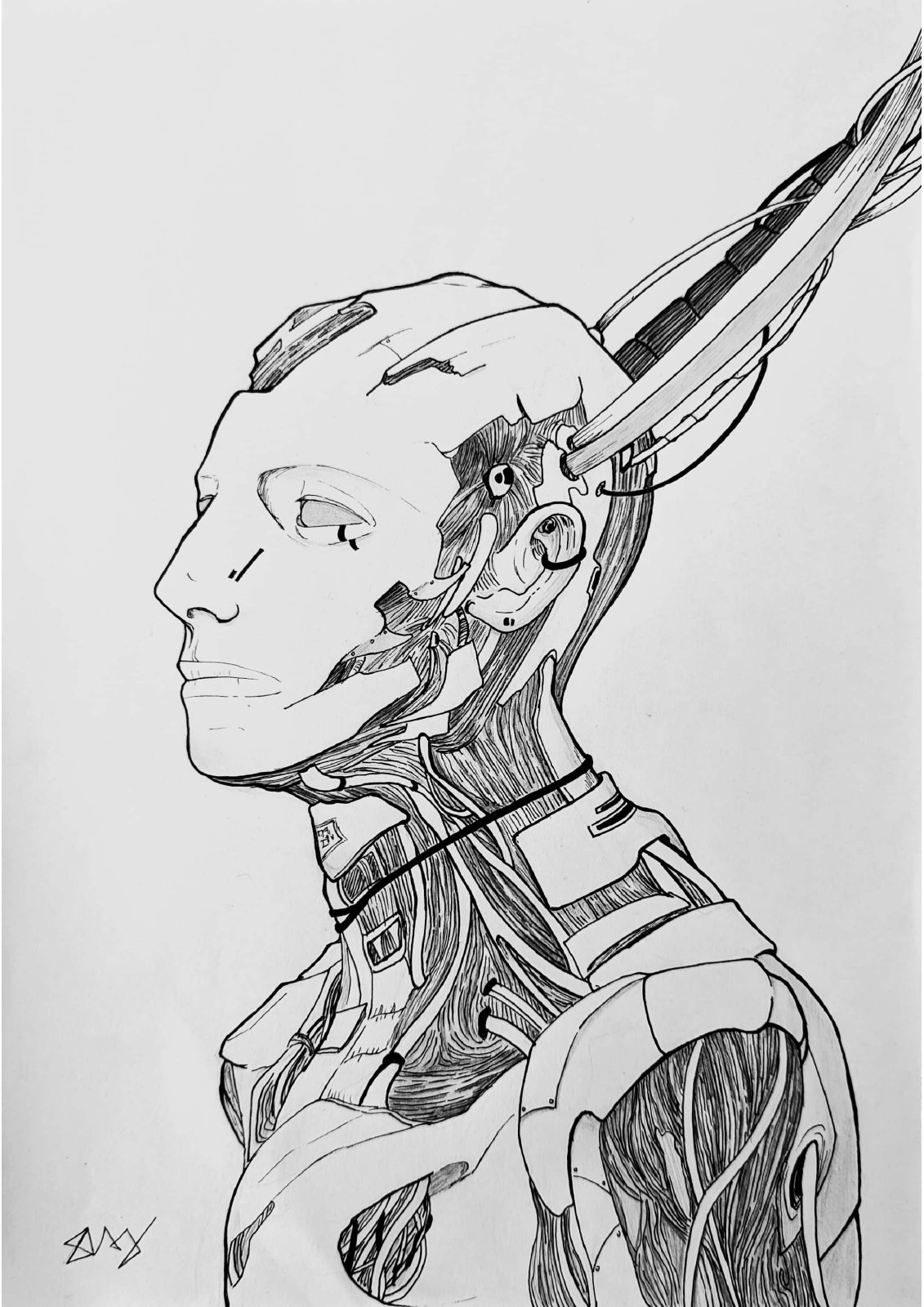
The B=B pieces made in response to my poster.
The fun part was that I got an invite to the opening. I also went to the press round, because I was curious. To be honest, I found it kind of boring. The journalists did not really ask any questions. They just took notes while Pep and the museum’s director introduced the exhibition and gave a speech, and that was it. A bit underwhelming, but still a cool experience. And I got paid, which was nice.
A poster is usually something people walk past in a hallway. I got to see mine in a museum. A=A, B=B ran from 13 December 2023 to 3 March 2024.
References:
- A=A, B=B, Museu Tàpies
- Bioengineering becomes art at the Antoni Tàpies Museum, IBEC, 13 Dec 2023
- B=B case studies, Museu Tàpies
- My thread on X about the exhibition, 11 Dec 2023
- Press page for the exhibition (archived), with the press note and the exhibition programme